Cell and Gene Therapy Workshop: From Innovation to Impact, Strengthening Collaboration Toward Next-Generation Cell Therapies in Indonesia
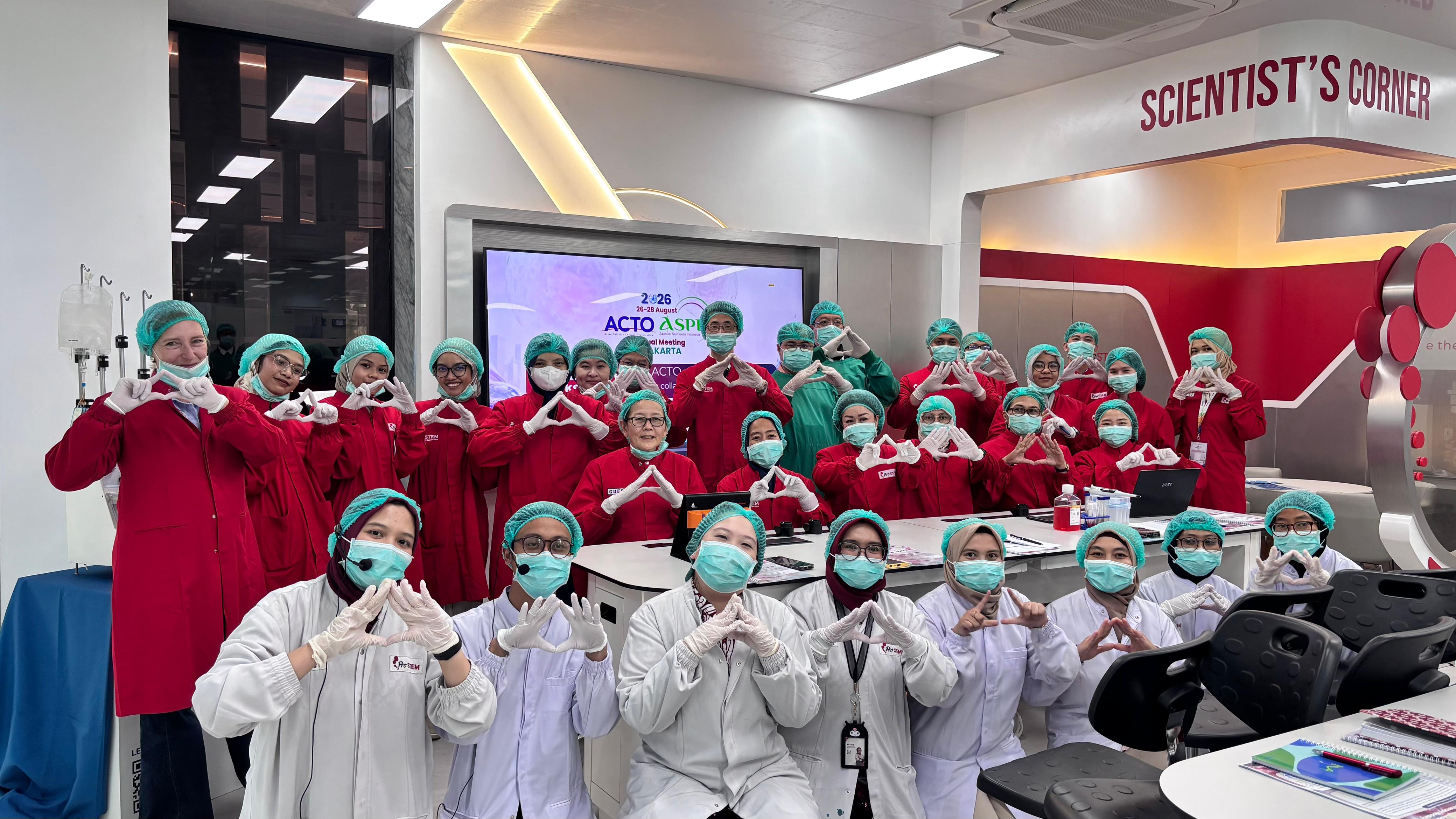
As part of the ACTO–ASPI 2026 Annual Meeting, the Cell and Gene Therapy Workshop: “From Innovation to Impact: Understanding iPSC and NK/CAR-T Technologies for Next-Generation Therapies” was successfully held on 29 August 2026 at the Advanced Cell Therapy Production Laboratory (ACT-PLab), PT Prodia StemCell Indonesia (ProSTEM), Jakarta. The workshop served as an important extension of the scientific discussions held during the annual meeting, providing participants with a more practical perspective on the development and implementation of cell and gene therapy technologies.
The workshop was designed as a platform for knowledge exchange and interdisciplinary interaction, bringing together key stakeholders within the cell therapy ecosystem, including researchers, clinicians, and industry representatives. The participation of professionals from diverse backgrounds created an opportunity to discuss cell and gene therapy from multiple perspectives, from scientific research and clinical translation to manufacturing, quality control, and the availability of supporting technologies and laboratory materials.
The workshop focused on emerging technologies in the field of advanced therapies, particularly induced pluripotent stem cells (iPSC) and NK/CAR-T technologies. These technologies offer significant opportunities for the development of next-generation therapies, while also presenting complex challenges related to standardization, reproducibility, safety, efficacy, manufacturing, and scalability. Addressing these challenges requires close collaboration among different sectors of the ecosystem.
An international perspective was provided by Satoshi Yasuda, Ph.D., from the National Institute of Health Sciences (NIHS), Japan, who shared insights into developments in cell therapy technology and its application within the broader context of advanced therapy development. From Indonesia, Dr. Ita M. Nainggolan, S.Si., M.Biomed., from the National Research and Innovation Agency (BRIN) contributed a national perspective on research and innovation in cell therapy. The combination of international and national perspectives allowed participants to better understand global developments while also considering the readiness and challenges of Indonesia’s own regenerative medicine ecosystem.
An important aspect of the workshop was its ability to bring together cell therapy experts, clinicians/practitioner, researchers, and also laboratory technologies provider. Industry participation is essential in building a sustainable cell therapy ecosystem, as the development of advanced therapies requires a broad range of supporting components, including specialized consumables, culture systems, manufacturing technologies, analytical tools, and quality control solutions.
The interaction between researchers, clinicians, cell therapy manufacturers, and laboratory technology providers also created opportunities for more practical discussions about real-world needs. Researchers and clinicians were able to communicate their requirements and challenges, while industry representatives could better understand the technological needs emerging from research and clinical settings. Such interaction is expected to support the development and adoption of technologies that are more relevant to the growing cell therapy landscape in Indonesia.
For clinicians, the workshop provided an opportunity to gain a deeper understanding of cell therapy technologies from a translational perspective. As cell-based therapies continue to move from experimental research toward clinical applications, clinicians need to understand not only the therapeutic potential but also the processes involved in product development, manufacturing, quality control, and patient safety. Strong collaboration between researchers and clinicians is therefore essential to ensure that scientific innovations are developed in response to genuine clinical needs.
At the same time, the involvement of industry plays an important role in bridging innovation with practical implementation. The transition from laboratory research to a clinically applicable therapy requires technologies, infrastructure, expertise, and manufacturing capabilities that can support consistent and scalable production. Collaboration with industry can therefore help transform promising research outcomes into solutions that are more feasible for real-world application.
The workshop was expected to serve as more than a one-day knowledge-sharing event. More broadly, it aimed to become a bridge between research, clinical application, industry, and regulatory perspectives in strengthening Indonesia’s cell and gene therapy ecosystem. The development of advanced therapies cannot be achieved by a single institution or sector. It requires continuous collaboration among researchers, clinicians, regulators, manufacturers, technology providers, and other stakeholders.
Through this workshop, participants were exposed to a better understanding of both the opportunities and challenges associated with iPSC, NK, and CAR-T technologies. Equally important, the event provided an environment for building new professional networks and potential collaborations among researchers, clinicians, research institutions, cell therapy facilities, cell therapy industries, and laboratory technology and consumables providers.
Ultimately, the Cell and Gene Therapy Workshop represented a collective effort to move cell and gene therapy from innovation to impact. The goal is not only to generate scientific discoveries, but also to develop technologies and therapeutic approaches that are safe, high-quality, standardized, and capable of being translated into meaningful benefits for patients.
With stronger collaboration among academia, clinical practitioners, industry, and regulators, Indonesia has the opportunity to further strengthen its position in the development of regenerative medicine and advanced therapies in Asia. Through continued knowledge exchange, technology development, and cross-sector partnerships, initiatives such as this workshop can contribute to building a more integrated and sustainable ecosystem for the next generation of cell and gene therapies.

Asian Cellular Therapy Organization