BRIN-ASPI International Seminar 2025: “Future Directions and Opportunities in Stem Cell Innovation for Clinical Application and the Health Industry” Lights the Path for Indonesia’s Regenerative Medicine
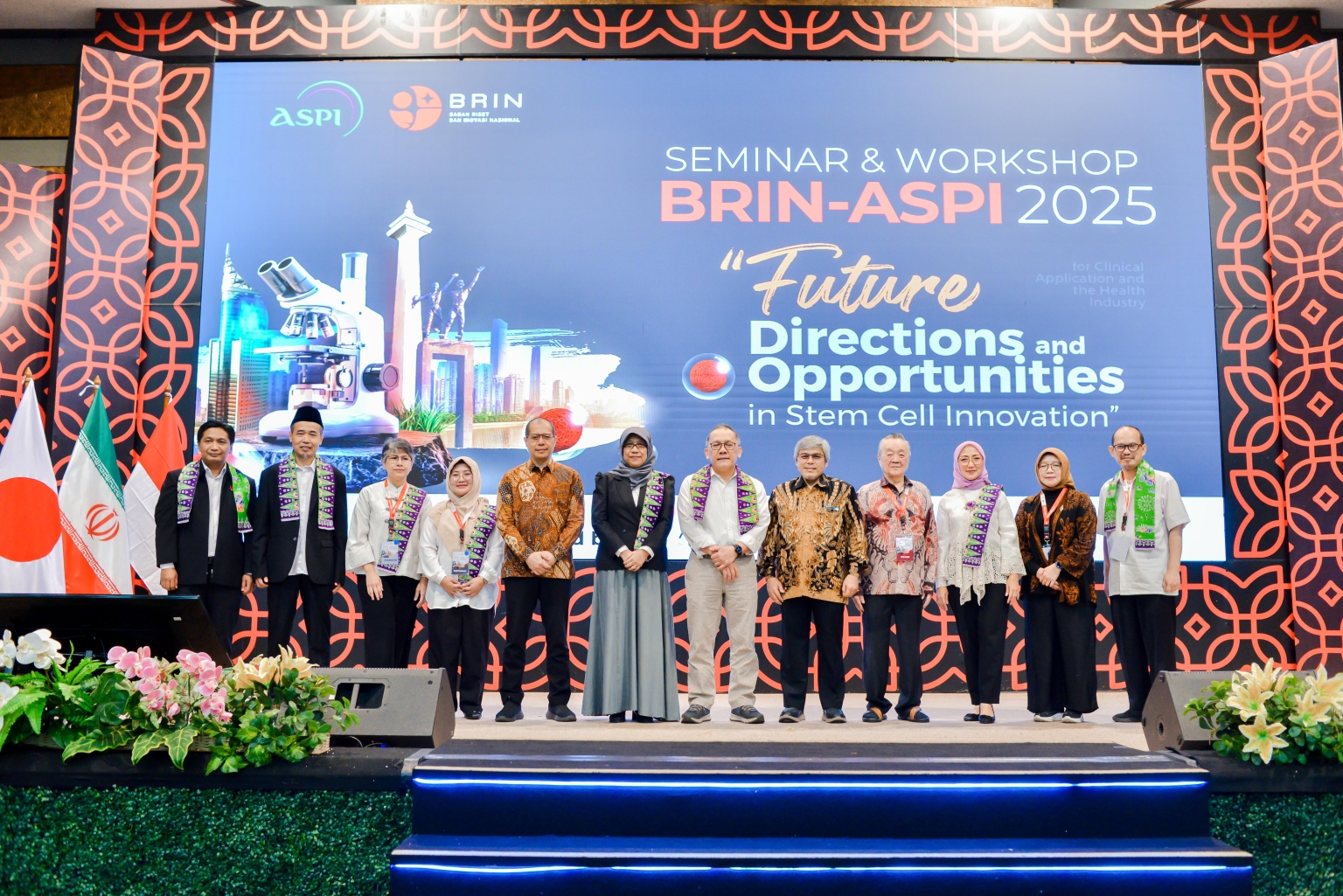
Jakarta, Indonesia – August 5–6, 2025
The International Seminar jointly hosted by the National Research and Innovation Agency (Badan Riset dan Inovasi Nasional, BRIN) and the Indonesian Stem Cell Association (Asosiasi Sel Punca Indonesia, ASPI) took place at the BJ Habibie Building – BRIN, Jakarta. Under the theme “Future Directions and Opportunities in Stem Cell Innovation for Clinical Application and the Health Industry”, the two-day forum showcased Indonesia’s commitment to advancing regenerative medicine on both national and international stages.
Leadership and Strategic Contribution
The seminar was successfully chaired by Dr. Cynthia Retna Sartika, M.Si, whose leadership was instrumental in shaping the event’s agenda, curating expert speakers, and ensuring seamless coordination between stakeholders. As Chair of the Organizing Committee, Dr. Cynthia brought together leading scientists, regulators, industry players, and academics to exchange knowledge, share research breakthroughs, and discuss the future direction of stem cell innovation.
Her role was further amplified through the strong institutional support of PT. Prodia StemCell Indonesia (ProSTEM), where she serves as a key scientific and strategic leader. ProSTEM played a pivotal role in supporting BRIN and ASPI—providing not only expertise in stem cell research and GMP-compliant production, but also logistical and operational assistance to ensure the seminar met international standards. This collaboration underscored ProSTEM’s long-term commitment to advancing regenerative medicine in Indonesia, both in research and clinical applications.
Boosting Research and Building Collaboration
Prof. Dr. drh. NLP Indi Dharmayanti, M.Si., Head of BRIN’s Health Research Organization, emphasized that successful translation of stem-cell technologies from the laboratory to clinical use hinges on strong infrastructure, adaptive regulation, and open institutional collaboration. Aligning with this vision, ASPI Chair Dr. dr. Rahyussalim, SpOT(K) underscored the seminar’s role in accelerating translational research and ensuring regenerative therapies are safe, effective, and accessible.
Key Insights from BPOM on Market Potential and Regulatory Oversight
BPOM Chief Prof. dr. Taruna Ikrar, M.Biomed, Ph.D. delivered a keynote address detailing the surging global market for Advanced Therapeutic Medicinal Products (ATMPs). She reported that biologics—such as RNA vaccines, gene therapies, and stem cell–based products—now account for roughly 65% of the USD 400 billion annual pharmaceutical market. Notably, the market for cell and gene therapies alone has climbed from USD 9 billion to USD 22.6 billion in just two years.
Highlighting Indonesia’s enormous economic potential, Prof. Taruna projected that the domestic stem cell‐based therapy market could reach an astounding IDR 100,000 trillion in the near future. She also stressed the need for rigorous regulation: BPOM has enacted Regulation No. 8 of 2024, which sets strict standards for manufacturing and distributing stem cell-based therapies. Additionally, under Article 435 of the 2023 Health Law, violators face up to 12 years imprisonment or fines up to IDR 5 billion.
To date, only five institutions—including Cipto Mangunkusumo Hospital, Kalbe Group, ProSTEM (Prodia StemCell Indonesia), and a cancer-focused facility—have achieved GMP certification for stem cell production. BPOM has identified 23 clinics operating without meeting regulatory standards; enforcement actions are underway. Prof. Taruna clarified that these efforts are not meant to stifle innovation but to safeguard the public—“Our people are not guinea pigs… we protect them,” she affirmed.
Fostering Young Researchers and Scientific Competitions
The seminar featured a scientific competition aimed at researchers and students to cultivate a culture of translational research early in their careers. A notable winner was Dr. Dini Asrianti Bagio from the Faculty of Dentistry, Universitas Indonesia, whose award-winning study explores Wharton’s Jelly secretome for dentin-pulp complex regeneration—now on track for clinical trials.
Focus Topics: Cell-Free and Cell-Based Therapies
Discussions on the first day revolved around emerging cell-free approaches, such as secretome and extracellular vesicles (EVs), which offer promising regenerative potential with reduced immunological risks. The second day delved into cell-based therapies, including ongoing preclinical and clinical endeavors in treating stroke, cardiovascular diseases, and degenerative disorders, presented by BRIN, ProSTEM, and international experts.
Roadmap and Continued Technical Empowerment
BRIN committed to developing a national roadmap for stem cell innovation that will guide future research, regulatory frameworks, and healthcare integration. To support technical capacity building, a follow-up workshop is scheduled for August 14–15, focusing on laboratory techniques, bioprocessing, and clinical analytics—further strengthening researchers’ and clinicians’ practical skills.
Conclusion: Indonesia on the Global Map
With robust leadership from Dr. Cynthia and strategic contributions from ProSTEM, alongside strong institutional collaboration and regulatory foresight, Indonesia is poised to become a key player in regenerative medicine. The BRIN-ASPI International Seminar 2025 marks a significant milestone—but more importantly, it signals Indonesia’s readiness to drive innovation that prioritizes scientific excellence, safety, and social impact on a global scale.